Source iso 02768 electronic enclosure for Medical, Industrial, Consumer
Compare 30 verified options for iso 02768 electronic enclosure tailored for medical, industrial, and consumer applications. Buyers can evaluate material, dimensions, and customization services from suppliers in China.
Key considerations
Products List




Comprehensive Sourcing Guide
Strategic Sourcing Guide for ISO 02768 Electronic Enclosures
Understanding Precision Standards in Enclosure Manufacturing
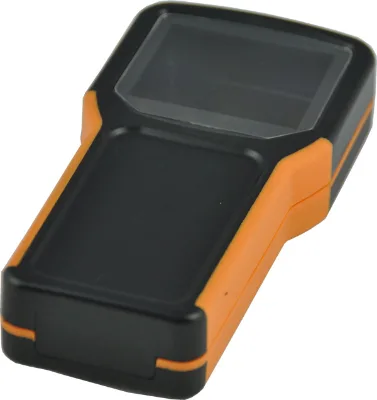
When sourcing electronic enclosures, the reference to ISO 02768 is critical for buyers seeking consistent dimensional tolerances without requiring individual drawings for every feature. This general standard for linear and angular tolerances is particularly relevant for the aluminum and ABS enclosure market, where mass production efficiency must not compromise fitment. In the context of the current supply landscape, manufacturers often produce models such as the HF-A-70, HF-N-167, and A-30, which rely on these general tolerances to ensure that components fit within the housing without excessive machining costs.
Buyers must recognize that ISO 02768 provides a baseline for "general tolerances" rather than a single fixed value. The standard categorizes tolerances into classes (e.g., fine, medium, coarse), and the specific class applied depends on the manufacturing process, such as die-casting for aluminum or injection molding for ABS. For instance, the HF-A-70 model features dimensions of H29mmW129mmL160mm, while the HF-N-167 measures 1558045MM. When evaluating suppliers, it is essential to verify that their production lines adhere to the specific tolerance class required for the application. Without this verification, a supplier might produce a unit that meets the nominal size but fails to accommodate internal electronic components due to accumulated tolerance errors.
The material selection plays a pivotal role in how these tolerances are maintained. Aluminum enclosures, such as those with models like AL-001 or HX-055, typically offer superior dimensional stability compared to ABS alternatives. However, the surface treatment process, often described as "Custom Finishing," can introduce slight variations. Buyers should understand that while the core dimensions are governed by ISO 02768, the final cosmetic finish and the precision of cutouts for connectors are where the most significant deviations can occur. Therefore, the procurement strategy must prioritize suppliers who explicitly state their adherence to ISO 02768 in their quality management systems, rather than relying solely on the nominal dimensions listed in product catalogs.
Compliance Verification and Certification Landscape
Navigating the certification landscape for electronic enclosures requires a rigorous approach to verifying the claims made by suppliers. The market data indicates a diverse range of certifications held by manufacturers, including ISO, RoHS, CE, UL, CCC, CQC, and TS16949. For a buyer focusing on ISO 02768 compliance, the presence of an ISO 9001:2008 or ISO 9001:2015 certification is a strong indicator that the supplier has a documented quality management system capable of maintaining dimensional consistency. However, it is crucial to distinguish between the ISO standard for quality management and the ISO 02768 standard for tolerances; a supplier may have one without the other.
The observed product listings show that certifications vary significantly by model and material. For example, the HF-N-10 and HF-N-56 models are associated with certifications such as RoHS, CE, and ISO, while other models like HX-053 and HX-062 are linked to a broader suite including UL, CCC, and CQC. This variation suggests that different product lines may be manufactured in different facilities or for different market regions, each with its own regulatory requirements. A buyer must not assume that a single certification covers the entire product range. Instead, the procurement process should include a request for specific test reports or certificates of conformity for the exact model number being ordered.
Furthermore, the presence of TS16949 certification is a significant differentiator, as this standard is specifically tailored for the automotive industry and implies a higher level of process control and defect prevention. If the electronic enclosure is intended for automotive or high-reliability industrial applications, verifying this certification is non-negotiable. For general electronic equipment applications, such as those listed for the A-30 model, a combination of RoHS and CE is often sufficient, provided the dimensional tolerances are strictly controlled. Buyers should also be aware that some suppliers list "ISO" as a general attribute without specifying the version, which requires clarification during the supplier evaluation phase to ensure the correct quality standard is in place.
Cost Drivers and Material Selection Analysis
The cost of an electronic enclosure is influenced by a complex interplay of material choice, customization level, and production volume. The observed data highlights two primary materials: Aluminum and ABS. Aluminum enclosures, such as the HF-A-123 and AL-001, generally command a higher price point due to the cost of raw material and the energy-intensive nature of the extrusion and machining processes. These units often feature "Custom Finishing" and are designed for applications requiring high durability and electromagnetic shielding. The ability to customize dimensions, as noted in the standard for HF-A-123 (H41mmW147mmL160mm), adds to the cost, as it requires dedicated tooling or flexible machining setups.
In contrast, ABS enclosures, like the HF-N-167 and HF-N-10, are typically more cost-effective for high-volume production. The injection molding process allows for rapid production of complex shapes with tight tolerances, provided the mold is of high quality. The observed MOQ (Minimum Order Quantity) ranges from 2PCS to 10000, indicating that suppliers are flexible but that unit costs will decrease significantly as volume increases. For example, a supplier offering an MOQ of 2PCS for a custom ABS enclosure may have a higher per-unit cost compared to a supplier with an MOQ of 5PCS for a standard aluminum box. Buyers must balance the need for customization against the budget constraints, understanding that "Customized" options, such as specific colors like Silver, Black, Yellow, or Light Gray, often incur additional setup fees.
Another significant cost driver is the lead time and the complexity of the surface treatment. The data shows delivery times ranging from 7 to 25 days for mass production. Longer lead times often correlate with more complex finishing processes or lower production volumes. Additionally, the "No Burrs, Anti Corrosion, No Deformation" features listed for certain aluminum models suggest that these products undergo additional quality checks and treatments, which contribute to the overall price. Buyers should request a detailed cost breakdown that separates material costs, tooling fees, and finishing charges to make informed decisions. It is also important to note that while some models have fixed dimensions, others allow for customization according to drawings, which can introduce variability in pricing that must be negotiated on a case-by-case basis.
Typical Applications and Functional Requirements
Electronic enclosures sourced under the ISO 02768 framework are designed for a wide array of applications, primarily centered around electronic equipment and electronics. The versatility of these enclosures is evident in the diverse range of models available, from the compact HF-N-10 (704529MM) to the larger HF-N-56 (825235MM) and the industrial-grade HF-A-70. The primary function of these enclosures is to protect sensitive electronic components from environmental factors such as dust, moisture, and physical impact, while also providing a mounting structure for internal assemblies.
The application scope extends to consumer electronics, industrial control systems, and automotive electronics. For instance, the A-30 model, with dimensions of 68145200MM, is suitable for applications requiring larger internal volumes, possibly for power supplies or control boards. The availability of "OEM.ODM" services indicates that these enclosures are frequently used in custom product development, where the enclosure must integrate seamlessly with proprietary electronic designs. The "Customized" color options, including Silver, Black, Yellow, and Light Gray, allow manufacturers to brand their products or match specific aesthetic requirements for different market segments.
Furthermore, the "No Deformation" and "Anti Corrosion" features are critical for applications in harsh environments, such as outdoor installations or industrial settings with high humidity or chemical exposure. Aluminum enclosures are particularly favored in these scenarios due to their inherent corrosion resistance and structural integrity. The ability to customize dimensions, as seen in the HF-A-123 and A-30 models, ensures that the enclosure can be tailored to fit specific internal components, optimizing space utilization and thermal management. Buyers should carefully assess the environmental conditions of the end-use application to select the appropriate material and finish, ensuring that the enclosure meets the necessary performance criteria over its intended lifespan.
Supplier Evaluation and Quality Control Protocols
Evaluating suppliers for electronic enclosures requires a systematic approach to verifying their capabilities and quality control measures. The observed data indicates that suppliers are located in various regions of China, including Guangdong and Mainland China, which are known for their robust manufacturing ecosystems. However, location alone does not guarantee quality. Buyers should prioritize suppliers who can demonstrate a clear understanding of ISO 02768 and provide evidence of their adherence to these standards through documented inspection reports.
Key criteria for supplier evaluation include the availability of certifications such as ISO 9001:2008, TS16949, and RoHS. These certifications serve as a baseline for the supplier's commitment to quality and environmental compliance. Additionally, buyers should inquire about the supplier's internal quality control processes, including the frequency of dimensional inspections and the equipment used for measuring tolerances. The "Custom Finishing" and "Customized" options mentioned in the product listings suggest that the supplier must have flexible production lines capable of handling small batches and custom orders without compromising quality.
Quality control should also extend to the packaging and shipping process. The observed "Carton Package" standard is a basic requirement, but buyers should verify if additional protective measures are available for fragile or high-value enclosures. The lead time of 7 to 25 days for mass production is another factor to consider; suppliers with longer lead times may have more rigorous quality checks, but this must be balanced against the buyer's project timeline. It is also advisable to request samples before placing a large order to verify the actual dimensions, surface finish, and overall quality against the specifications provided.
Long-Term Procurement and Supply Chain Resilience
Sourcing electronic enclosures is not merely a transactional activity but a strategic decision that impacts the long-term success of a product line. Buyers should consider the scalability of their supplier relationships, ensuring that the chosen partner can handle volume increases without sacrificing quality or lead times. The observed MOQ ranges from 2PCS to 10000, indicating that suppliers are capable of supporting both prototyping and mass production phases. However, buyers must be prepared to negotiate volume discounts and secure capacity during peak demand periods.
Supply chain resilience is another critical consideration. The reliance on specific materials like Aluminum and ABS, along with the need for custom finishing, makes the supply chain vulnerable to raw material price fluctuations and production disruptions. Buyers should diversify their supplier base to mitigate these risks, ensuring that they have alternative sources for critical components. Additionally, maintaining open communication with suppliers regarding production schedules and potential delays can help manage expectations and prevent project bottlenecks.
Finally, buyers should plan for the end-of-life management of their products. Enclosures that are difficult to recycle or dispose of may face regulatory challenges in the future. Selecting suppliers who adhere to RoHS and other environmental standards ensures that the products remain compliant with current and future regulations. By focusing on long-term relationships and sustainable practices, buyers can build a robust supply chain that supports the growth and evolution of their electronic products over time.
FAQs
What certifications are available for these electronic enclosures?
Available certifications include ISO, RoHS, CE, UL, CCC, CQC, and TS16949 depending on the specific model. Buyers should verify the exact certificate for the ordered item, as different product lines may hold varying compliance standards for different regions.
Which materials are used for these enclosure housings?
Enclosures are primarily manufactured from Aluminum or ABS plastic. Aluminum models often feature custom finishing and anti-corrosion properties, while ABS options provide cost-effective solutions for high-volume production needs.
Can the dimensions of these enclosures be customized?
Yes, dimensions can be customized according to drawings or samples for many models. Specific standard sizes like 155*80*45MM or 68*145*200MM are available, but buyers can request tailored measurements to fit specific internal components.
What is the typical delivery time for mass production?
Mass production delivery times range from 7 to 25 days depending on the order volume and customization level. Some models with standard specifications may ship within 7 to 15 days, while complex custom finishes might require up to 25 days.
What is the minimum order quantity for these products?
Minimum order quantities vary by model, ranging from as low as 2 pieces to 10,000 pieces. Standard aluminum or ABS boxes often have low MOQs like 5 or 2 pieces, allowing for small batch testing or prototyping.
Are OEM and ODM services offered for these enclosures?
Yes, OEM and ODM services are available for customizing these electronic enclosures. Suppliers support color customization in silver, black, yellow, or light gray, along with tailored dimensions and surface treatments to meet specific branding needs.